
Immersive Experience Use Cases for Modern Museums
14 July 2026 - Museums have always been places where history, culture, and knowledge are preserved for future generations. However, the expectations of today's visitors have changed significantly. Rather than simply observing artifacts from a distance, people now seek experiences that are interactive, emotionally engaging, and memorable. This shift has encouraged museums worldwide to embrace immersive technology as a way to redefine how stories are shared. An immersive museum experience goes beyond digital displays. It combines storytelling, architecture, lighting, sound, and visual technology to create an environment where visitors feel connected to the narrative. Instead of reading about an ancient civilization, for example, visitors can walk through a recreated environment, experience its atmosphere, and gain a deeper understanding of the people and events that shaped history.
This transformation is not about replacing traditional collections. Authentic artifacts remain the heart of every museum. Immersive technology simply adds another layer of interpretation, allowing museums to present information in ways that are more engaging and accessible for audiences of all ages. Through projection mapping, LED displays, interactive installations, and spatial audio, exhibitions become dynamic spaces that encourage exploration rather than passive observation.
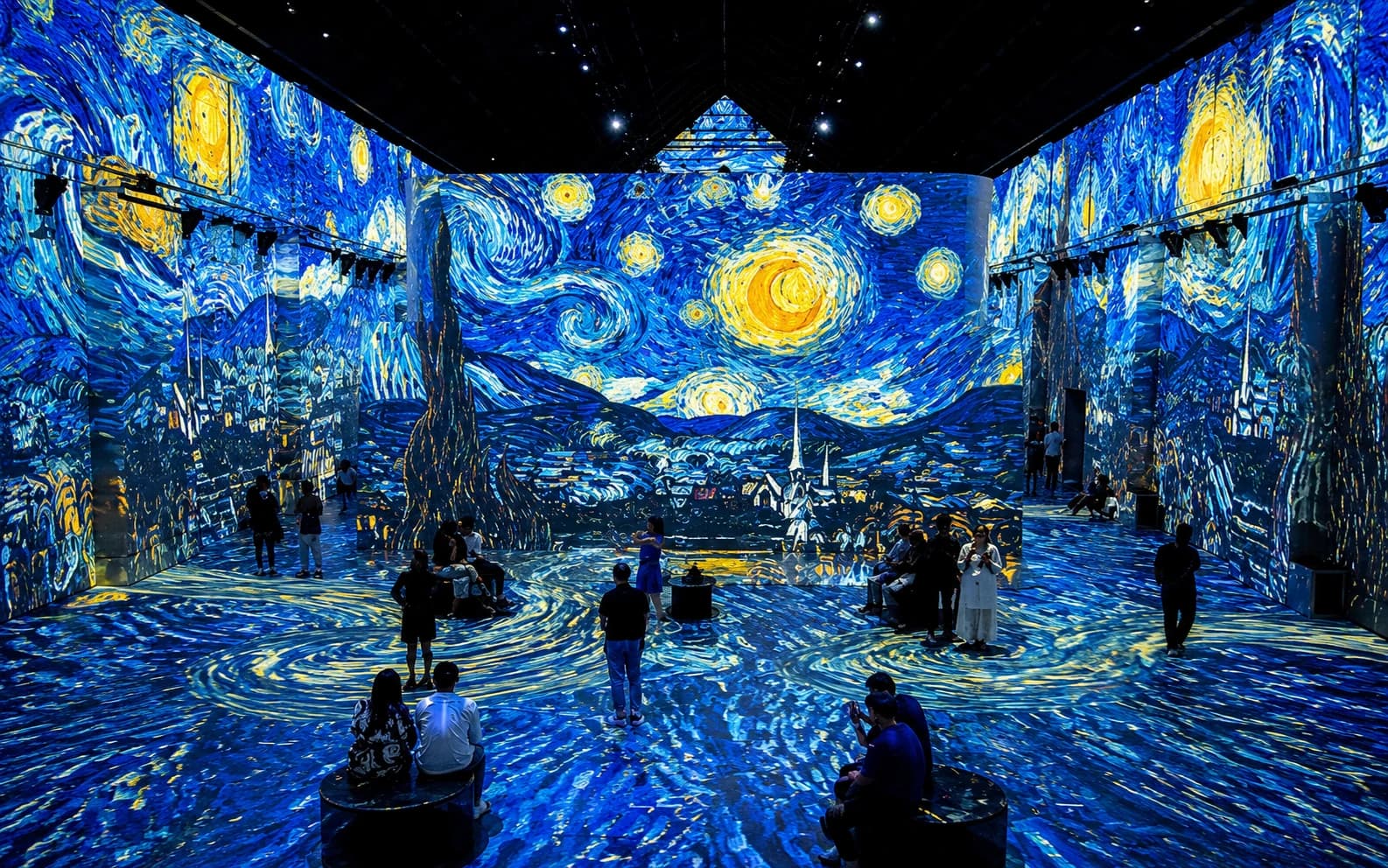
Art museums have also adopted immersive experiences to introduce collections from a fresh perspective. Rather than displaying paintings on static walls, digital projections can animate brushstrokes, reveal the creative process behind an artwork, or surround visitors with visual interpretations inspired by the artist's vision. These experiences create emotional connections that often leave a stronger impression than conventional exhibitions alone.
Science and natural history museums have found similar value in immersive environments. Complex concepts such as climate change, deep-sea ecosystems, or space exploration become easier to understand when visitors can experience them through interactive visualizations. By transforming abstract information into immersive environments, museums create educational experiences that are both engaging and memorable. The growing popularity of immersive exhibitions has also changed visitor expectations. People are increasingly looking for destinations that offer something worth sharing—not only through photographs and videos but through meaningful personal experiences. Museums that integrate immersive technology often encourage visitors to spend more time exploring exhibitions, revisit new installations, and engage more deeply with educational content.
Another advantage of immersive technology is its flexibility. Unlike permanent architectural changes, digital content can be updated, refreshed, or customized for temporary exhibitions, seasonal events, or traveling collections. This allows museums to continuously introduce new experiences while preserving their existing spaces and collections. As technology continues to evolve, immersive experiences are becoming an essential part of modern museum design rather than a temporary trend. The most successful museums are those that combine innovation with meaningful storytelling, ensuring that every digital element serves a purpose within the visitor journey.
Ultimately, the goal of an immersive museum is not to impress visitors with technology alone. It is to create moments of curiosity, emotion, and discovery that make history, art, and culture feel alive. When thoughtfully designed, immersive experiences transform a museum visit from simply viewing an exhibition into becoming part of the story itself.