
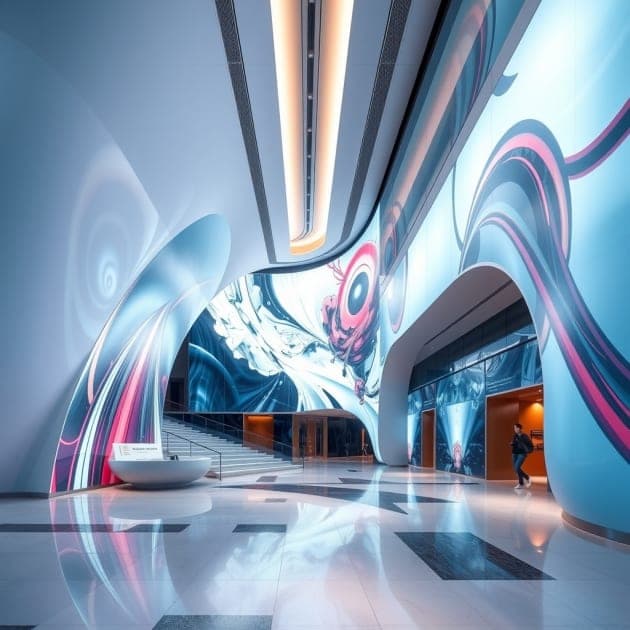
From Static Walls to Dynamic Canvases
Light Emitting Diode (LED) displays have significantly reshaped modern architecture and interior design, evolving static environments into dynamic, interactive, and immersive visual experiences. Initially, digital screens were often standalone additions to buildings, such as large billboards on facades that lacked integration with the surrounding architecture [2]. This approach, while effective for certain purposes, frequently felt disconnected, potentially obstructing natural light or disrupting architectural lines. However, a notable shift has occurred, where architects and developers now consider LED displays an intrinsic element of a space's architectural language, transitioning from mere 'screens on buildings' to 'buildings designed for media' [1].
Technological Advancements Driving Integration
This architectural transformation is enabled by significant technological innovations in LED displays. A key breakthrough is the development of flexible LED screens, which, unlike rigid panels, utilize specialized printed circuit boards that can bend, curve, and conform to irregular surfaces like columns, curved walls, or arches [3]. This flexibility empowers architects to realize ambitious designs without conventional shape constraints [2]. These flexible LED displays can seamlessly integrate with various materials such as metal, glass, or concrete, transforming ordinary surfaces into vibrant visual experiences that enhance a structure's original design aesthetic [3].
Additionally, advances in fine pixel pitch technology have led to ultra-high-resolution LED displays visible from close distances without pixelation, making them ideal for interior applications in lobbies, meeting rooms, and control centers [5]. Technologies like chip-on-board (COB) further expand possibilities for high-resolution indoor displays [5]. Transparent LED panels represent another innovation, allowing light to pass through while simultaneously displaying digital content [4]. With transparency levels reaching up to 80-90%, these screens can convert retail storefronts and glass facades into dynamic digital canvases without blocking views or natural light [4].
Redefining Architectural and Interior Spaces
LED displays are now instrumental in creating interactive building facades for modern commercial structures, using flexible displays to project advertisements, artwork, or information while conforming to building contours and enhancing aesthetic appeal [1]. Indoors, flexible LED panels generate adaptive and immersive environments, with hotel lobbies transforming into digital art galleries and corporate offices utilizing curved LED walls for engaging presentations [3]. Retail spaces can create themed environments that transport visitors, while displays wrap around columns, flow along undulating architectural elements, and form seamless, immersive curved installations [3].
These displays also enable dynamic visual identities, allowing buildings to alter their appearance as desired [7]. Facades can exhibit vibrant branded visuals or bold architectural statements, empowering architects and brands to create spaces that evolve with seasons or special events [7]. Beyond content display, LED technology has revolutionized architectural lighting, offering unparalleled design flexibility for curved accent lighting, dynamic color walls, and integrated strip lighting within ceilings and wall surfaces [8].
Enhanced User Experience and Sustainability
LED displays elevate the user experience by crafting customized ambiences and moods, guiding movement through spaces, and even influencing human well-being through human-centric lighting that adjusts color temperature and brightness [6]. This integration extends beyond conventional functions, transforming buildings into visual storytellers that engage the senses and captivate visitors [1].
Moreover, LED displays align with sustainability objectives due to their energy efficiency, consuming less power and generating less heat than traditional lighting sources [6]. The extended lifespan of LEDs reduces replacement frequency, minimizing waste and lowering overall environmental impact [6].
The Future of Visual Integration
Looking ahead, innovation in LED technology continues to advance. MicroLED technology promises superior brightness, contrast, and energy efficiency, with potential for ultra-thin displays [2]. The integration of artificial intelligence (AI) is also set to optimize content delivery and display management, while emerging technologies such as textured displays can mimic natural building materials when turned off, further integrating displays with architecture [2]. In essence, the evolution of LED displays has transformed architecture and interior design from static constraints into dynamic, flexible, immersive, and adaptive canvases. With ongoing advancements, this visual technology will continue to redefine how we interact with our built environments, truly embodying where technology meets imagination.
Sumber Referensi
- [1] clearled.com
- [2] aetdisplays.com
- [3] hscled.com
- [4] aerodigitalworld.com
- [5] onedisplaygroup.com
- [6] ledful.com
- [7] sansidisplays.com
- [8] onqdigitalgroup.com.au
Penelusuran sumber melalui Google Search: Evolution of LED displays in architectural design · LED screens in modern interior design trends · Impact of LED technology on architectural aesthetics · Advancements in LED display technology for commercial spaces · Flexible and creative LED display applications in architecture