
Introduction to Spatial Storytelling in Digital Architecture
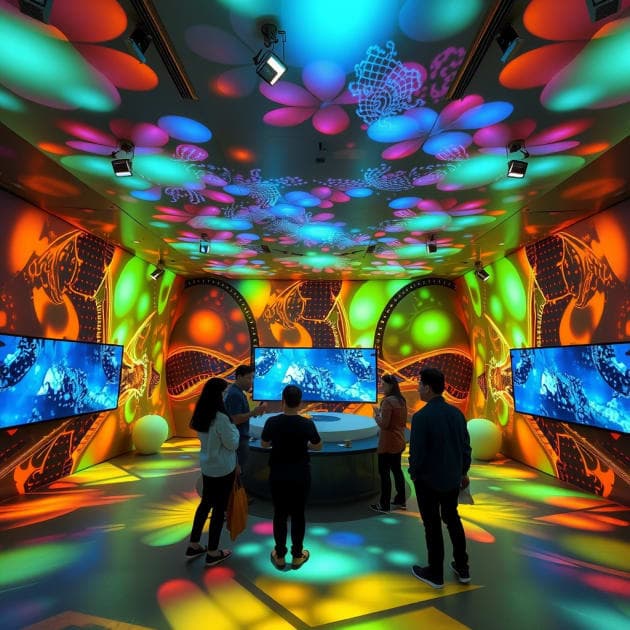
Digital architecture has moved far beyond physical boundaries, opening a new dimension where environments are not merely viewed but deeply experienced through spatial storytelling [1]. This innovative concept leverages advanced technology to build immersive settings, completely transforming how audiences interact with narratives and assume an active role within the experience [2].
Understanding the psychological foundation behind spatial storytelling in digital architecture is essential for designing environments that successfully blend visual appeal with profound emotional and cognitive impact [1, 2].
Living Inside the Narrative: The Cognitive Dimension
At its core, spatial storytelling focuses on constructing narratives through three-dimensional environments that users can actively and interactively explore [3]. Unlike traditional media formats, digital architecture allows individuals to literally live inside a story instead of remaining passive observers, granting them a direct participatory role in the narrative flow [4].
This medium cleverly capitalizes on the innate human capacity to process sensory inputs and construct mental spatial maps, even within virtual settings that are completely free from the traditional constraints of physical reality and gravity [3, 4].
Unlocking Deep Emotional and Neural Responses
The primary psychological aspect of spatial storytelling is rooted in its remarkable capacity to spark deep emotional and cognitive reactions [5]. Highly immersive environments, particularly those driven by technologies like Virtual Reality, activate distinct neural mechanisms that standard flat screens simply cannot reach [6].
Research indicates that immersive 3D spaces powerfully engage mirror neurons, dopamine reward loops, spatial presence, awe circuits, embodied cognition, flow states, and episodic memory encoding [5, 6]. This phenomenon of digital awe can be deliberately engineered through careful adjustments in scale, unconventional physics, and unique perspective shifts [5, 6].
Key Elements of Effective Immersive Environments
Several vital components contribute to successful spatial storytelling, including cohesive audio-visual design and meticulously planned guidance systems [7]. Every single property, artwork, or piece of furniture inside a virtual space must actively support the broader overarching narrative, ensuring even the smallest elements tell a distinct story [8].
Furthermore, lighting, color choices, and contrast levels hold significant influence over human moods and emotions, such as soft warm lighting fostering calmness while dark high-contrast scenes induce tension [7, 8].
Interactivity, Comfort, and Human Limitations
Interactivity serves as another foundational pillar for immersive spatial storytelling by encouraging active audience participation and shifting individuals from observers into true participants [1]. When users feel their inputs are genuinely acknowledged, their level of engagement with the overall narrative increases substantially [2].
At the same time, maintaining user comfort and straightforward navigation is critical, as spatial disorientation can quickly lead to frustration [3]. Properly designed immersive spaces carefully respect the limits of human working memory capacity and executive attention [4].
Transforming Spaces with Envision
Embracing the true potential of digital architecture goes far beyond basic displays or LED screens, pointing instead toward comprehensive immersive experiences [1]. Envision achieves this by expertly integrating Micro-LED technology, digital artistry, engineering, media servers, sensory elements, and interaction design to reshape ordinary rooms into extraordinary digital environments [2].
By utilizing The Multiverse Engine as a medium for storytelling, Envision ensures that spaces receive specific identities and unique narratives [3]. We invite you to explore how transforming your physical environment into an interactive digital experience allows your audience to step directly inside the story [4].
Sumber Referensi
- [1] kimsarc.com
- [2] cedsgreeb.org
- [3] tandfonline.com
- [4] utsubo.com
- [5] thesocialcat.com
- [6] atlantis-press.com
- [7] anfarch.org
- [8] intechopen.com
Penelusuran sumber melalui Google Search: psikologi penceritaan spasial arsitektur digital · psikologi narasi spasial dalam lingkungan virtual · arsitektur digital dan pengalaman imersif · dampak psikologis arsitektur digital interaktif · psikologi desain pengalaman imersif · spatial storytelling virtual reality psychology · digital architecture immersive experience psychology · the role of narrative in digital spaces psychology