
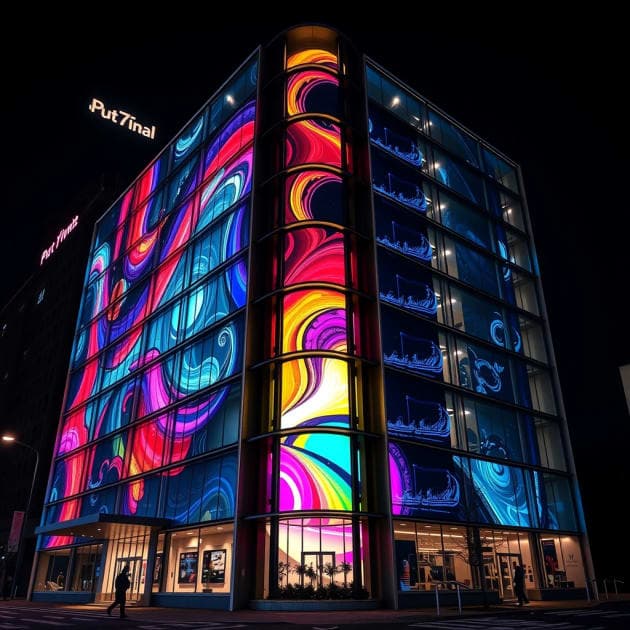
The Evolving Canvas of Modern Architecture
Modern architecture has expanded beyond mere structure and function, with buildings now expected to communicate, captivate, and deliver memorable visual experiences [1]. This transformation has positioned LED display technology as a crucial tool for architects and designers, enabling structures and interior spaces to become dynamic visual surfaces without compromising their original design integrity [1, 2]. The integration of LED displays allows buildings to express a living vision, acting as dynamic components of the overall design.
From Rigid Structures to Dynamic Visual Expressions
Historically, buildings were defined by their static physical forms, with facades, surfaces, and shapes remaining constant after construction [1]. The advent of LED technology, however, has transformed these surfaces into active design elements capable of telling stories, adapting to their environment, and evolving over time [1]. For instance, glass facades can become living canvases for digital art, and corporate headquarters can feature exteriors that change with seasonal brand campaigns [1]. This innovative integration extends design relevance and makes buildings responsive parts of their urban landscapes [1].
Key Principles for Harmonious LED Integration
Achieving seamless LED display integration in modern architecture involves harmonizing technology with the building's structure, rather than simply adding an element [2]. A primary principle is to ensure the technology enhances, rather than competes with, the architectural intent, aiming for installations that elevate the building's design [2, 3]. The most impactful integrations arise from early design collaboration, bringing together architects, engineers, and LED specialists from the initial stages to address structural, electrical, and environmental needs comprehensively [2].
Strategic Technology Selection and Environmental Considerations
Choosing the right LED technology is crucial for seamless integration. Flexible LED displays are ideal for complex architectural forms such as curved walls, circular columns, or undulating ceilings, allowing digital visuals to conform to surfaces without altering the building’s design [4, 5]. Transparent LED displays offer an innovative solution for glass facades and storefronts, maintaining natural light and visibility while showcasing dynamic content [4, 6]. Custom shapes and configurations provide unparalleled creative possibilities, allowing screens to be designed to align precisely with specific building lines [4].
Technical and environmental factors are also paramount. Pixel pitch, which is the distance between LED centers, influences image clarity and determines optimal viewing distance; smaller pitches are suitable for closer viewing, while larger pitches are for distant viewing [7]. Brightness must be adjusted for expected ambient light conditions, and exterior installations require displays with high IP ratings (IP65 or above) to withstand direct sunlight, heavy rain, extreme temperatures, and varying humidity [7, 8]. Furthermore, mounting structures must support the display, align with the building's design, and account for weight, wind loads, cabling, power, and maintenance access from the outset [7, 8].
Content Strategy and Future Impact
The content displayed on integrated LED screens should be meticulously designed for its medium and architectural context, utilizing bold forms, slower movements, and appropriate contrast for peripheral viewing and day/night comfort [1]. Advanced control systems enable content scheduling, rotation, real-time updates, and system monitoring [1]. Beyond aesthetics, LED display integration enhances user experience, offering new ways to guide, inform, and engage without disrupting architectural beauty [1]. For instance, a curved LED display in a lobby can greet visitors with moving visuals that complement the building's design theme [1].
LED technology also offers reliability, a long lifespan, energy efficiency, and lower maintenance needs, making it a sustainable choice [1]. By transforming buildings into dynamic canvases that can change with seasons, mark special events, or set the perfect mood, premium LED displays are becoming critical elements in modern architecture [1]. As architecture continues to evolve towards more interactive and visually engaging spaces, solutions that merge technology with imagination, like Envision's premium LED displays, will continue to redefine urban environments and deliver profound visual experiences.
Sumber Referensi
- [1] hscled.com
- [2] pixelflexled.com
- [3] scispace.com
- [4] 3cinno.com
- [5] aerodigitalworld.com
- [6] l2l-ledscreens.com
- [7] onedisplaygroup.com
- [8] pixelflexled.com
Penelusuran sumber melalui Google Search: design principles seamless LED display integration modern architecture · challenges LED display integration architecture · benefits of architectural LED displays · architectural LED screen design guidelines · LED technology in building facades design · creative LED display integration in commercial spaces